Trading lessons & educational analysis

Free educational posts published to our 6,500+ TradingView followers, covering risk management, psychology, chart patterns and crypto fundamentals. Tap any card to read the full lesson.

BTCUSDT — Volume Profile Patterns Explained: P, b, D & B Shapes
BINANCE:BTCUSDT1D
Education

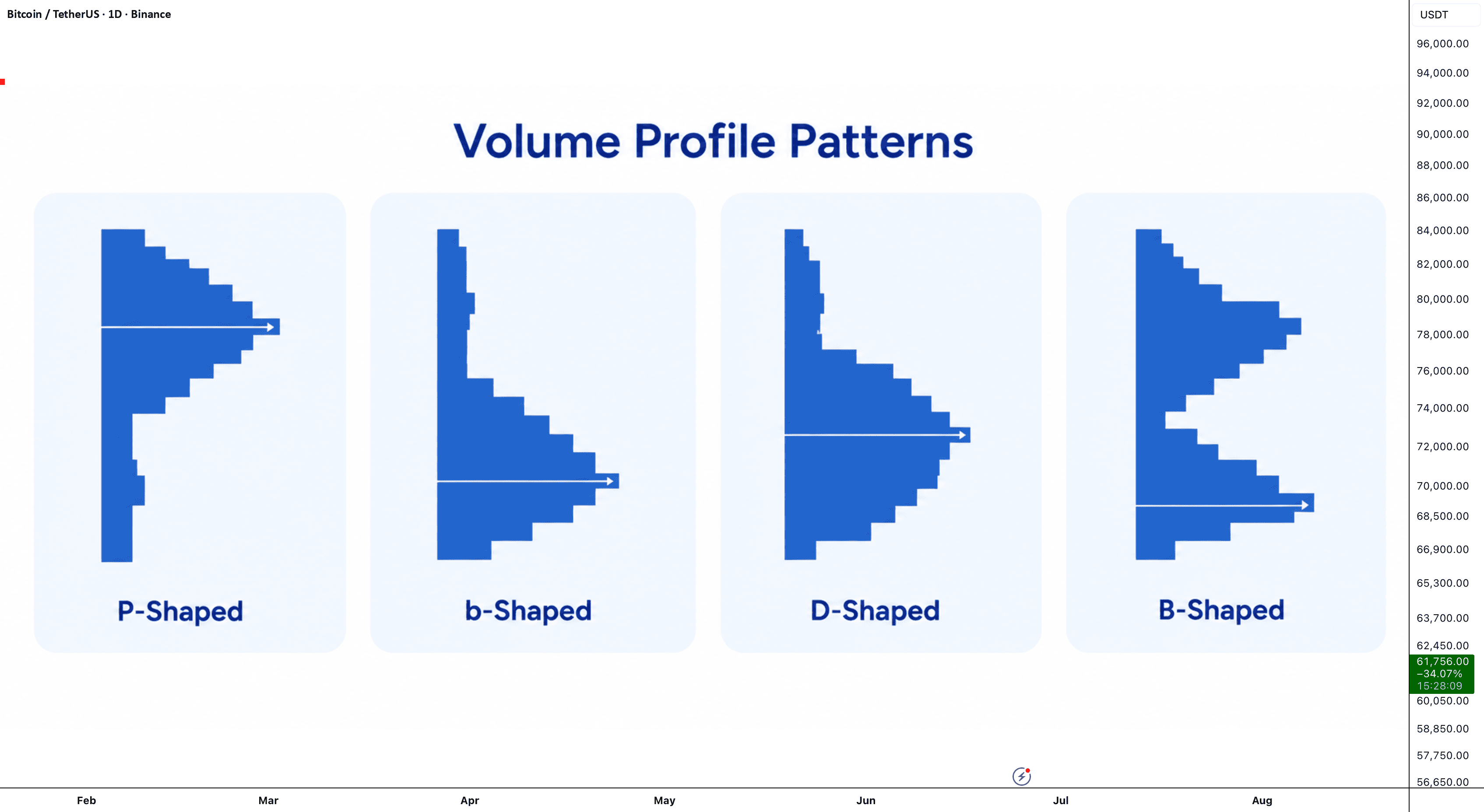
Volume Profile Patterns Explained: P, b, D & B Shapes

Understanding the shape of a Volume Profile is one of the fastest ways to identify who is in control of the market and what type of auction is taking place. Instead of focusing only on price, Volume Profile shows where the market accepted value (high volume) and where it rejected value (low volume). Each profile shape reflects a different balance between buyers and sellers, helping traders anticipate continuation, reversals, breakouts, or range-bound conditions. The four most common Volume Profile patterns are: P-Shaped Profile b-Shaped Profile D-Shaped Profile B-Shaped Profile What is a Volume Profile? Volume Profile displays the amount of trading volume executed at each price level during a selected period. Unlike traditional volume bars that show volume over time, Volume Profile shows volume by price, revealing where institutions accumulated or distributed positions. The widest part of the profile is called the Point of Control (POC) the price where the highest trading volume occurred. Large volume nodes indicate fair value and acceptance, while thin areas indicate rejection and inefficient price movement. Understanding the overall profile shape often provides more insight than an individual candle 🔷P-Shaped Profile Shape: Thin volume at the bottom, tapering into a wide, high-volume cluster (bulge) at the top. The Point of Control (POC)—indicated by the white arrow—sits near the upper portion of the range. Psychology: This pattern typically occurs during a strong upward trend or a sudden bullish breakout. Aggressive buyers drive the price up rapidly (creating the thin lower "stem" where little trading had time to take place). Eventually, the price reaches a level where buyers and sellers find a temporary balance, creating a high-volume node at the top. It can also represent a short-squeeze, where trapped sellers are forced to buy back their positions in a panic. -How to Trade It: * The top bulge represents the new value area. - Treat the sharp transition area (where the thin stem meets the thick bulge) as a strong support zone on a pullback. Look for long entries if the price retraces to the lower boundary of the "P" head. 🔷b-Shaped Profile Shape: A mirror image of the P-shape. It features a thin volume "stem" at the top and a wide, high-volume cluster at the bottom. The POC rests in the lower half. Psychology: This pattern signifies a strong downward trend or a bearish breakout. Sellers aggressively slam the price down, leaving little volume behind in the upper region. As the selling pressure slows, a consolidation zone forms at the lows, resulting in heavy volume accumulation. This often points to long liquidation (buyers capitulating and selling out of their positions). How to Trade It: - The lower bulge represents the current acceptance of lower prices. - The transition zone where the thin upper stem meets the lower cluster acts as a strong resistance zone. Look for short setups on any relief rallies that retest the upper edge of the "b" head. 🔷D-Shaped Profile Shape: A symmetrical, bell-shaped curve resembling the letter "D". The highest volume sits right in the middle, which is where the POC is located. Psychology: This is the ultimate sign of a balanced or ranging market. Both buyers and sellers agree on the "fair value" of the asset, and the price is churning heavily within a defined bracket. Institutional players frequently use D-shaped profiles to quietly accumulate or distribute large positions without moving the price aggressively. How to Trade It: - Mean Reversion Strategy: Buy near the value area lows (bottom of the D) and sell/short near the value area highs (top of the D), targeting the central POC. - Breakout Strategy: Wait for the price to break out of the D-shape. A decisive close outside of this balance zone often triggers a powerful, trending move. 🔷B-Shaped Profile The Shape: An elongated profile featuring two distinct high-volume bulges separated by a low-volume area in the center (often called a "Double Distribution"). The POC can reside in either the upper or lower bulge depending on where the most volume accumulated. The Psychology: This shape represents a market in transition. It tells us that the market was balanced at one price area, but a sudden influx of buying or selling pressure forced the price out of that zone into a new balance area. It highlights two distinct zones of "fair value" competing against one another. How to Trade It: - Treat the low-volume node (the narrow "waist" in the middle of the B) as a major rejection zone. Price will rarely chop around here; it will usually bounce off it or slice right through it. - If the price is trading in the upper bulge, the middle node acts as support. If trading in the lower bulge, the middle node acts as resistance. Volume Profile patterns provide a unique perspective by showing where the market spent the most effort, rather than simply where price moved. A P-shaped profile often reflects bullish short covering, a b-shaped profile suggests distribution or long liquidation, a D-shaped profile represents a balanced market, and a B-shaped profile highlights a transition between two accepted value areas. Understanding these profile shapes can help traders interpret market behavior more effectively and identify areas where future trading opportunities may develop. Like any analytical tool, Volume Profile works best when used as part of a complete trading strategy that includes confirmation, risk management, and sound market analysis.

H
HexaTrades
Jun 25, 2026
29722
ETHUSD — Look First, Then Leap
INDEX:ETHUSD1M
Education

Look First, Then Leap

In trading, how you prepare matters more than how you react. The phrase “Look first, then leap” reminds traders to avoid impulsive decisions and instead focus on proper analysis, planning, and risk control. Whether you're trading stocks, forex, crypto, or commodities, this principle can save you from painful losses and build a foundation for long-term success. Let’s break down what it really means to “look first,” and how applying this mindset can improve your trading discipline. ✅Preparation Beats Emotion Before entering any trade, a trader should ask: What is this trade based on? Logic or emotion? 🔹 Control Impulsive Decisions Most losing trades happen when people act on gut feelings, FOMO, or after seeing a sudden price spike. But excitement is not a strategy; analysis is. 🔹 Check the Basics First -What is the market trend? (uptrend, downtrend, or sideways?) -Are you trading with or against the trend? -Are there any upcoming news events that might impact the market? Taking a moment to “look first” gives clarity and filters out low-probability trades. ✅ Trade Only When There’s a Setup The best trades often come from waiting for the right moment, not forcing entries. 🔹 Identify Clear Patterns Before jumping in, confirm your strategy setup: -Is it a breakout or a fakeout? -Are key support/resistance levels respected? -Is volume supporting the move? 🔹 Use Confirmation Tools Indicators like RSI, MACD, and moving averages can support your decision. Price action and patterns like triangle, channel, and flag also provide valuable clues. Look first means not reacting to the first move; wait for the follow-through. ✅ Always Define Risk and Reward Entering a trade without a defined stop-loss or target is like jumping into water without checking its depth. 🔹 Use a Risk-Reward Ratio Before leaping into a trade, ask yourself: -What am I risking? -What can I gain? Aim for a minimum risk-reward ratio of 1:2 or 1:3 to stay profitable even with a lower win rate. 🔹 Position Sizing Matters Know how much of your capital to allocate. Using 1-2% of your capital per trade helps manage losses and avoid emotional pressure. ✅ Adjust for Market Conditions Just because you’ve seen success in one type of market doesn’t mean your strategy will always work. 🔹 Trending vs. Ranging Markets -Trend-following strategies work well in strong trends. -Mean-reversion or breakout-fade strategies work better in sideways markets. 🔹 Check for Major News or Events Earnings reports, central bank meetings, or geopolitical events can change everything in seconds. Before entering a trade, look at the calendar. Adapting to market conditions is part of looking first. ✅ Use a Trading Plan, Not Just a Feeling Every trade should follow a plan, not just “I think this will go up.” 🔹 What Should Your Plan Include? Entry and exit rules -Stop-loss and take-profit levels -Criteria for valid setups -Timeframes and trading hours A plan brings structure and consistency, reducing emotional decisions. ✅ Journaling and Reviewing Trades Looking first also means learning from the past. 🔹 Keep a Trading Journal Log every trade entry, exit, reason, emotion, and outcome. This helps you spot mistakes and patterns in your behavior. 🔹 Review Regularly After a drawdown or losing streak, review your last 10–20 trades. Was your strategy sound? Were you disciplined? Did you look before you leaped? Improvement comes from reflection and correction. ✅ Be Mentally Ready Before Every Trade Looking first also means checking your internal state. 🔹 Ask Yourself Before Trading: -Am I calm and focused? -Am I trying to recover a loss? -Am I trading because I’m bored or emotional? If your mindset is off, step away. A bad state leads to bad decisions—even with a good strategy. ✅Backtest and Practice Before Going Live Before risking real money, test your setup thoroughly. 🔹 Why Backtesting Helps It lets you see how your system performs on historical data. This builds confidence and filters out weak strategies. 🔹 Demo Trading Is Smart, Not Weak Trading in a demo account before going live helps you learn execution, order management, and emotional control—without financial damage. ✅ Protect Capital First, Trade Second Your first goal isn’t to make money, it’s to stay in the game. 🔹 Survive First, Then Thrive Big losses can take weeks or months to recover. That’s why looking first is critical—it prevents careless trades that damage your capital. ✅Final Word: Be the Trader Who Waits The market rewards those who are patient, disciplined, and prepared. Anyone can open a trade, but only those who look first truly understand what they’re doing. Before your next trade, ask yourself: “Do I have a clear reason, a defined risk, and the right mindset? Or am I just reacting?” Because in trading, it’s not how many trades you take, it’s how many good trades you wait for. In trading, success doesn't come from speed; it comes from clarity, preparation, and discipline. The principle “Look first, then leap” serves as a constant reminder to slow down, observe, analyze, and plan before taking action. It’s a mindset that separates the disciplined trader from the emotional speculator. Every trade you take should be backed by logic, not impulse. Whether it’s identifying the right setup, managing your risk, or simply being patient enough to wait for confirmation, looking first gives you control in a world that thrives on chaos. In the end, trading isn’t about making quick money—it’s about making the right decisions consistently. So before your next trade, take a breath, do your research, and ask yourself: “Am I truly ready to leap, or do I need to look one more time?” That one extra moment of reflection could be the difference between a lesson and a profit. Cheers Hexa🧘‍♀️ Chart Image Credit: TradingView

H
HexaTrades
Jul 23, 2025
280
BTCUSD — Protect Capital First, Trade Second
CRYPTO:BTCUSD1M
Education

Protect Capital First, Trade Second

In the world of trading, mastering technical analysis or finding winning strategies is only part of the equation. One of the most overlooked but essential skills is money management. Even the best trading strategy can fail without a solid risk management plan. Here’s a simple but powerful money management framework that helps you stay disciplined, protect your capital, and survive long enough to grow. ✅1. Risk Only 2% Per Trade The 2% rule means you risk no more than 2% of your total capital on a single trade. -Example: If your trading account has $10,000, your maximum loss per trade should not exceed $200. -This protects you from large losses and gives you enough room to survive a losing streak without major damage. A disciplined approach to risk keeps your emotions under control and prevents you from blowing your account. ✅2. Limit to 5 Trades at a Time Keeping your number of open trades under control is essential to avoid overexposure and panic management. -A maximum of 5 open trades allows you to monitor each position carefully. -It also keeps your total account risk within acceptable limits (2% × 5 trades = 10% total exposure). -This rule encourages you to be selective, focusing only on the highest quality setups. Less is more. Focus on better trades, not more trades. ✅3. Use Minimum 1:2 or 1:3 Risk-Reward Ratio Every trade must be worth the risk. The Risk-Reward Ratio (RRR) defines how much you stand to gain compared to how much you’re willing to lose. -Minimum RRR: 1:2 or 1:3 Risk $100 to make $200 or $300 -This allows you to be profitable even with a win rate below 50%. Example: If you take 10 trades risking $100 per trade: 4 wins at $300 = $1,200 6 losses at $100 = $600 → Net profit = $600, even with only 40% accuracy. A poor RRR forces you to win frequently just to break even. A strong RRR gives you room for error and long-term consistency. ✅4. Stop and Review After 30% Drawdown Drawdowns are a part of trading, but a 30% drawdown from your account's peak is a red alert. When you hit this level: -Stop trading immediately. -Conduct a full review of your past trades: -Were your losses due to poor strategy or poor execution? -Did you follow your stop-loss and risk rules? -Were there changes in the market that invalidated your setups? You must identify the problem before you continue trading. Without review, you risk repeating the same mistakes and losing more. This is not failure; it’s a checkpoint to reset and rebuild your edge. Final Thoughts: Survive First, Thrive Later In trading, capital protection is the first priority. Profits come after you've mastered control over risk. No trader wins all the time, but the ones who respect risk management survive the longest. Here’s your survival framework: 📉 Risk max 2% per trade 🧠 Limit to 5 trades ⚖️ Maintain minimum 1:2 or 1:3 RRR 🛑 Pause and review after 30% drawdown 🧘 Avoid revenge trading and burnout Follow these principles and you won't just trade, you'll trade with discipline, confidence, and longevity. Cheers Hexa

H
HexaTrades
Jul 23, 2025
70
BTCUSD — Crypto Options Trading: A Beginner's Guide
CRYPTO:BTCUSD1D
Education

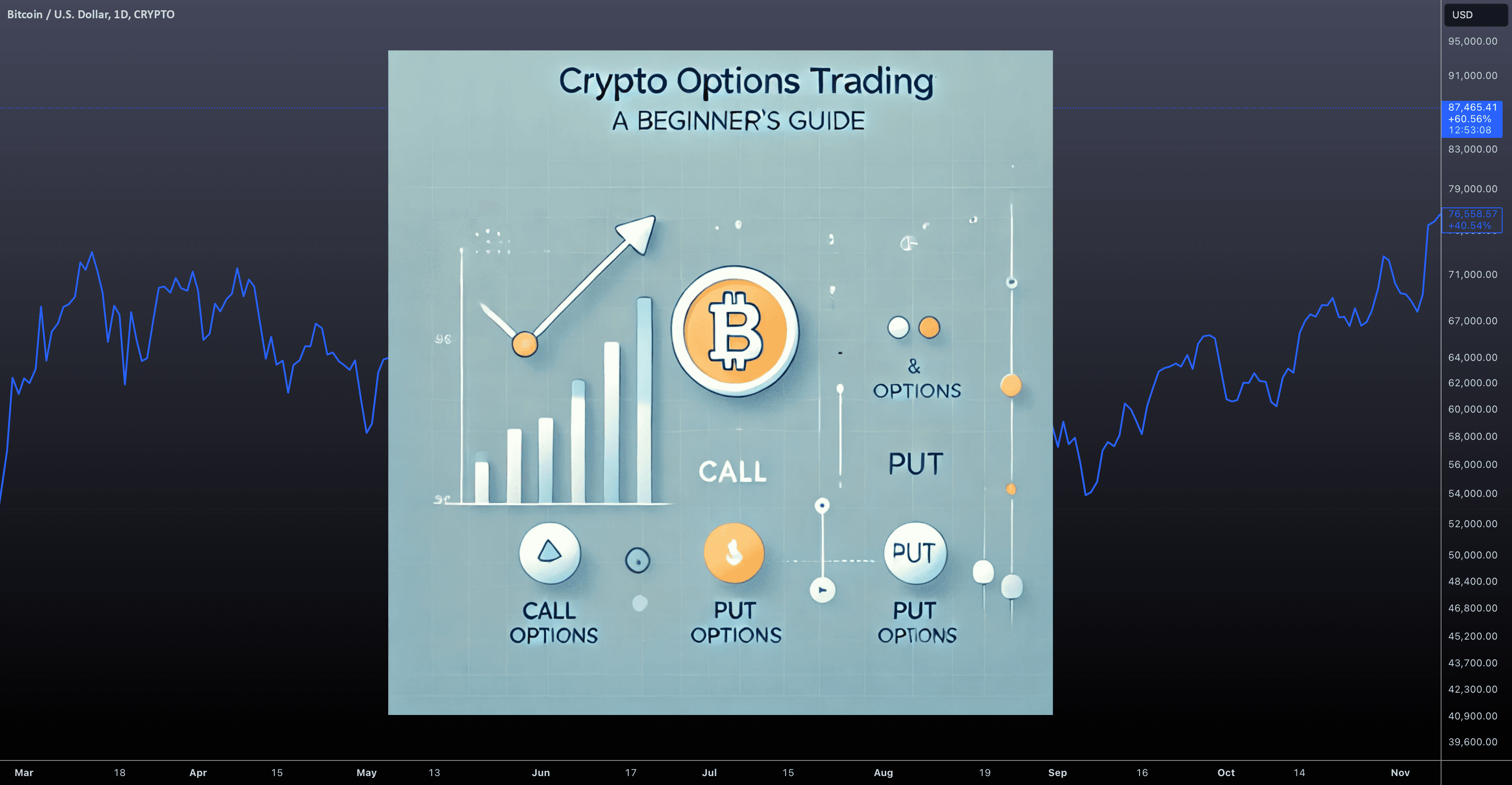
Crypto Options Trading: A Beginner's Guide

Crypto options trading is emerging as a popular way for traders to hedge risk, amplify profits, and diversify their trading strategies. As the cryptocurrency market matures, options trading is gaining traction among both traditional and crypto-native traders who seek a new way to leverage the volatility of digital assets. Here’s an in-depth look at what crypto options are, why they’re compelling, and how to navigate this evolving market. What Are Crypto Options? In simple terms, a crypto option is a financial contract that gives the trader the right—but not the obligation—to buy or sell an underlying asset (like Bitcoin or Ethereum) at a predetermined price, known as the “strike price,” within a specific time frame. Options can either be: Call Options: These give the holder the right to buy the underlying asset at the strike price. Put Options: These allow the holder to sell the underlying asset at the strike price. Crypto options can be a valuable tool to manage risk in a market characterized by high volatility. The premium paid for an option can be significantly lower than the outright purchase of the cryptocurrency, allowing traders to gain exposure with limited capital at risk. Why Trade Crypto Options? The benefits of trading crypto options go beyond just leveraging price movements. Here are some core reasons why crypto options have become attractive: Hedging: Options allow investors to hedge against adverse price movements. For example, a Bitcoin holder can buy put options to offset potential losses if Bitcoin’s price drops. Leverage: Options provide leverage, allowing traders to control a large position with relatively small capital. This magnifies potential gains, though it also increases potential losses. Profit in All Market Conditions: Options strategies can be designed for various market conditions—bullish, bearish, or even sideways. This flexibility can be a game-changer in the highly volatile crypto market. Limited Downside Risk: When buying options, the maximum loss is limited to the premium paid, making it a potentially safer way to speculate than futures or spot trading. Key Terms in Crypto Options Trading Before diving into trading strategies, it's essential to understand the core terms: Premium: The cost of purchasing the option, which the buyer pays to the seller. Strike Price: The predetermined price at which the option can be exercised. Expiration Date: The date at which the option contract expires. In-the-Money (ITM): When an option has intrinsic value. For example, a call option is ITM if the underlying asset’s price is above the strike price. Out-of-the-Money (OTM): When an option has no intrinsic value. For example, a put option is OTM if the asset’s price is above the strike price. Mention the key terms related to the option shown in the image below. Types of Crypto Options Crypto options primarily fall into two types: American Options: These can be exercised at any time before expiration. European Options: These can only be exercised at expiration. Most crypto exchanges offering options (such as CoinCall, Binance) focus on European-style options due to their simplicity and cost efficiency. Popular Crypto Options Trading Strategies Long Call: This involves buying a call option when you expect the price to rise. The upside potential is unlimited, while the maximum loss is limited to the premium paid. Long Put: Ideal for bearish outlooks, buying a put option allows you to profit from a price decline. Again, the maximum risk is limited to the premium. Covered Call: For this, you hold a long position in the asset and sell a call option. This generates income through the premium while capping potential gains if the price rises beyond the strike price. Protective Put: Similar to a stop-loss, a protective put allows you to hold a long position while buying a put option to protect against downside risk. Straddle: A strategy for high volatility, a straddle involves buying a call and a put option at the same strike price and expiration. Profits occur if the price moves significantly in either direction. Strangle: Like a straddle but with different strike prices for the call and put options. It’s a good strategy if you expect volatility but aren’t sure of the direction. Risks of Crypto Options Trading While crypto options trading provides flexibility, it comes with risks: Volatility Risk: Crypto markets are highly volatile, and while this is favorable for some options strategies, extreme fluctuations can result in significant losses. Liquidity Risk: Not all crypto options have high liquidity, especially for less popular assets. This can lead to wider spreads and difficulty in executing trades at desired prices. Complexity: Options trading requires a deep understanding of various strategies and how options prices react to market changes. Without adequate knowledge, traders can incur losses. Time Decay: Options lose value as expiration approaches (especially for OTM options). This phenomenon, known as “theta decay,” can erode potential profits if the market doesn’t move favorably soon enough. Key Metrics in Crypto Options: The “Greeks” To understand the dynamics of options pricing, traders should familiarize themselves with the “Greeks,” which measure the sensitivity of the option’s price to various factors. Delta: Measures how much the option’s price changes with a $1 change in the underlying asset’s price. Gamma: Measures the rate of change of delta over time. Theta: Represents time decay, showing how much value the option loses each day as it nears expiration. Vega: Measures the sensitivity of the option’s price to changes in volatility. Rho: Indicates how much the option’s price changes with a change in interest rates, which is often minimal in the crypto space. Crypto options trading provides a valuable addition to a trader’s toolkit, offering flexibility and an alternative way to profit from market volatility. Whether you’re looking to hedge a position, profit from volatility, or speculate with defined risk, crypto options can be highly beneficial. Yet, success in options trading doesn’t come from guesswork; it requires a solid understanding of the mechanics, diligent strategy testing, and constant risk assessment. For those who put in the time to learn and adapt, crypto options trading can open new avenues for profit in an ever-evolving market.

H
HexaTrades
Nov 12, 2024
90
BTCUSDT — Halloween Horror: Avoiding Common Trading Mistakes
BINANCE:BTCUSDT1W
Education

Halloween Horror: Avoiding Common Trading Mistakes

As Halloween approaches, it’s the perfect time to reflect on the common “frights” that can scare traders away from success. Just like ghosts and ghouls lurking in the shadows, trading mistakes can be sneaky and unexpected. This post will highlight some of the most common trading mistakes, drawing parallels with Halloween themes, and provide strategies for avoiding these pitfalls. 🎃Fear of Missing Out (FOMO) Many traders experience FOMO, which can lead to impulsive decisions, such as chasing after rapidly rising stocks or jumping into trades without proper analysis. This behavior often results in buying at peak prices and facing losses when the stock inevitably corrects. Set Clear Entry and Exit Points: Establish specific criteria for entering and exiting trades to avoid emotional decisions. Stick to Your Plan: Have a trading plan that includes risk management strategies. Review your plan regularly, especially in volatile market conditions. 👻 Overtrading In an attempt to capitalize on every opportunity, some traders overtrade, leading to excessive fees, emotional fatigue, and ultimately poorer performance. Overtrading can resemble a Halloween party gone wild, with too many participants causing chaos. Limit Your Trades: Set a maximum number of trades per week or month. Focus on quality over quantity. Take Breaks: Allow yourself time away from the screen to recharge and refocus. This helps in making more rational decisions. 🕷️Ignoring Risk Management Trading without proper risk management is akin to wandering through a haunted house without a flashlight. You’re likely to encounter unexpected dangers. Failing to set stop-loss orders or to size positions appropriately can lead to catastrophic losses. Implement Stop-Loss Orders: Set stop-loss orders at a predetermined level to limit potential losses. Diversify Your Portfolio: Spread your investments across different asset classes and sectors to mitigate risk. 👺 Emotional Trading Trading decisions driven by emotions such as fear, greed, or panic can lead to disastrous results. Emotional trading is like letting a ghost dictate your path through a dark forest—it's unpredictable and often leads to mistakes. Keep a Trading Journal: Document your trades, including the reasoning behind them and your emotional state at the time. This will help you identify patterns and triggers in your decision-making process. Practice Mindfulness: Incorporate techniques like meditation or deep breathing to remain calm and focused during trading hours. 🦇Neglecting Research and Analysis Many traders skip the crucial step of research and analysis, relying instead on tips or rumors—much like believing in urban legends without questioning their validity. This can lead to uninformed trades and unexpected losses. Conduct Thorough Analysis: Use both technical and fundamental analysis to make informed trading decisions. Stay updated on market news and trends. Leverage Trading Tools: Utilize platforms like TradingView to access charts, indicators, and community insights. [b 🕸️Chasing Losses After experiencing losses, some traders attempt to "revenge trade," trying to quickly recover their losses by taking high-risk trades. This often results in deeper losses and a vicious cycle of frustration. Accept Losses as Part of Trading: Understand that losses are inevitable. Learn from them rather than trying to immediately recover. Take a Step Back: If you find yourself in a negative trading streak, consider taking a break to reassess your strategies and mental state. 👽 Not Adapting to Market Conditions The market is constantly changing, and clinging to outdated strategies can be dangerous. This is similar to wearing the same costume year after year—eventually, it becomes stale and ineffective. Stay Flexible: Be willing to adapt your trading strategies based on current market conditions. Regularly review and refine your approach. Educate Yourself: Continuously seek knowledge through courses, webinars, and market analysis to stay informed about new trends and strategies. As the Halloween season creeps in, it’s time to face the spooky realities of trading! By identifying and confronting common trading frights, you can transform potential pitfalls into stepping stones for success. Remember, every trader encounters challenges, but preparation, discipline, and continuous learning are your best defenses against the ghouls of the market. So, this Halloween, don’t let fear haunt your trading journey. Embrace the tricks of the trade, sharpen your skills, and turn those frights into fruitful opportunities! Here’s to a successful and spooktacular trading experience!🎃👻🕸️

H
HexaTrades
Oct 29, 2024
60
NVDA — FEAR: Your Biggest Trading Enemy
NASDAQ:NVDA1M
Education

FEAR: Your Biggest Trading Enemy

Fear is a natural emotion that affects all traders, whether beginners or experienced professionals. In trading, fear often stems from uncertainty, the potential for losses, and the volatility of financial markets. Left unchecked, fear can lead to poor decision-making, impulsive actions, and even significant financial losses. However, by understanding fear and learning how to manage it effectively, traders can improve their performance and build confidence over time. Steps to Overcome Fear in Trading Develop a Trading Plan Having a well-structured trading plan provides clarity and reduces fear. A plan should include specific rules for entry and exit, risk management strategies, and profit targets. When you follow a plan, you take emotions out of decision-making and rely on data-driven strategies. Stick to your plan: Trusting your trading strategy can reduce emotional decision-making, especially during times of market volatility or uncertainty. Use Risk Management Effective risk management can alleviate fear because it limits the potential downside of any trade. Traders should: Set a stop-loss: Predetermine the maximum amount you are willing to lose on any trade. This not only limits losses but also takes the emotional pressure off monitoring trades. Control position sizing: By using small position sizes relative to your account balance, you minimize the impact of any one trade, which can reduce fear and emotional stress. Focus on Process, Not Outcomes Instead of focusing on whether an individual trade is profitable, concentrate on executing trades according to your plan. Understand that losses are part of trading and that a single trade doesn't define your overall success. Avoid emotional attachment to trades: Treat trading as a probabilistic game where losses and gains balance out over time if your strategy is sound. Build Confidence with Knowledge Fear often stems from uncertainty. The more knowledge and experience you gain, the more confident you’ll feel in your trading decisions. Spend time improving your understanding of: Technical analysis: Learn to read charts, patterns, and indicators to make informed decisions. Fundamental analysis: Understand the economic factors that drive market movements. Regularly review your past trades, both successful and unsuccessful, to learn from mistakes and build confidence in your abilities. Practice Patience and Discipline Patience is crucial to avoid overtrading or jumping into trades impulsively. Fear can push you into making quick decisions, but staying disciplined ensures you wait for the right setups. Discipline in following your trading plan and sticking to risk management rules can help control the emotional swings that come with fear. Staying patient allows trades to develop fully and increases the chances of success. Accept Losses as Part of the Process No trader wins 100% of the time, and understanding that losses are a natural part of trading can help reduce the fear of losing. Treat each loss as a learning experience rather than a failure. Reframe your mindset from avoiding losses to managing losses. When you accept that losses will happen but you can limit their impact, fear becomes easier to handle. Control Emotional Reactions Mindfulness techniques: Practices like deep breathing, meditation, or taking regular breaks can help traders stay calm during high-pressure situations. Avoid overreacting: If you experience a significant loss, avoid the temptation to enter a "revenge trade" to recover quickly. Emotional decisions can compound losses. Take a step back, review your plan, and re-enter the market with a clear mind. Use a Trading Journal Keeping a trading journal helps track your emotions, thought processes, and decision-making patterns. Over time, this can help identify fear-based behaviors and allow you to adjust accordingly. By reviewing your journal regularly, you can improve self-awareness and make better decisions. Fear is a natural part of trading, but it doesn't have to control your actions. By developing a solid trading plan, practicing effective risk management, and building knowledge and discipline, traders can overcome fear and make more rational decisions. Over time, learning to accept losses and focusing on long-term strategies will help you manage fear and improve your overall trading success. Remember, the key to overcoming fear is consistent practice, self-awareness, and developing confidence in your abilities as a trader.

H
HexaTrades
Oct 22, 2024
80
BTCUSDT.P — Open Interest Explained
BINANCE:BTCUSDT.P1M
Education

Open Interest Explained

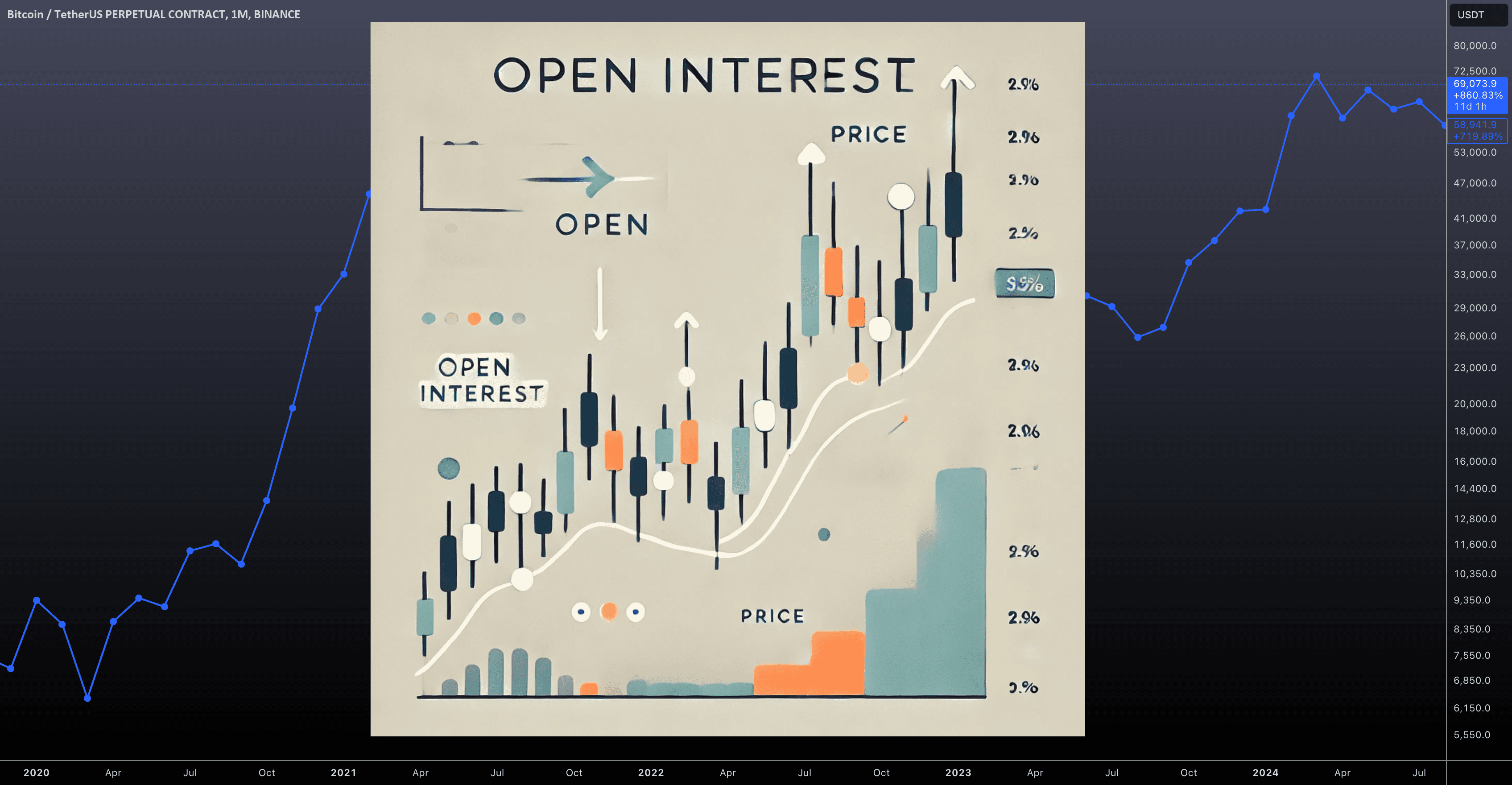
Open interest (OI) is a critical concept in the world of trading, particularly in the futures and options markets. It represents the total number of outstanding contracts that have not been settled or closed. Understanding open interest can provide valuable insights into market sentiment, liquidity, and potential price movements. In this article, we will explore what open interest is, how it affects trading, and what traders should consider when analyzing it. What is Open Interest? Open interest is defined as the total number of outstanding derivative contracts—such as futures and options—that have not yet been settled. Each time a new contract is created (when a buyer and seller enter into a new agreement), the open interest increases. Conversely, when a contract is settled or closed, the open interest decreases. For example, if a trader buys a futures contract, open interest increases by one. If another trader sells the same contract to close their position, open interest decreases by one. Why is Open Interest Important? Open interest provides insights into market activity and can indicate the strength of a price trend. Here are some key reasons why open interest is important for traders: Market Sentiment: Open interest can help traders gauge market sentiment. Rising open interest, especially alongside rising prices, suggests that new money is entering the market and that the bullish trend may continue. Conversely, increasing open interest with falling prices may indicate that bearish sentiment is growing. Liquidity Indicator: Higher open interest generally indicates greater market liquidity. This means that traders can enter and exit positions more easily, which is especially important for large institutional traders who need to manage large orders without significantly impacting the market price. Potential Price Movements: Analyzing open interest trends can help traders predict potential price movements. For instance: - Increasing Open Interest + Rising Prices: This combination suggests that new bullish positions are being established, indicating a potential continuation of the uptrend. -Increasing Open Interest + Falling Prices: This scenario may indicate that new bearish positions are being taken, suggesting a potential continuation of the downtrend. -Decreasing Open Interest: A decline in open interest, particularly in conjunction with rising prices, may suggest that traders are closing their positions, which can signal a weakening trend. How to Analyze Open Interest When analyzing open interest, traders should consider several factors: [ b]Contextual Analysis: Always consider open interest in conjunction with price movements. Relying solely on OI without considering price action can lead to misleading interpretations. Volume Comparison: Compare open interest with trading volume. High volume alongside increasing open interest is generally a positive sign for a trend, while high volume with decreasing open interest may signal trend exhaustion. Market Events: Be aware of upcoming economic reports, earnings announcements, or other events that may impact market sentiment and influence open interest. Different Markets: Open interest can behave differently across various asset classes. For example, in commodity markets, high open interest might reflect hedging activity, while in equity options, it could indicate speculative interest. Open interest is a valuable tool for traders to assess market sentiment, liquidity, and potential price movements. By analyzing it alongside price action and volume, traders can gain deeper insights into market trends and make more informed trading decisions. However, like any trading indicator, it works best when combined with other forms of analysis for a well-rounded strategy.

H
HexaTrades
Oct 20, 2024
60
TOTAL — Diversify Your Crypto Investments
CRYPTOCAP:TOTAL1D
Education

Diversify Your Crypto Investments

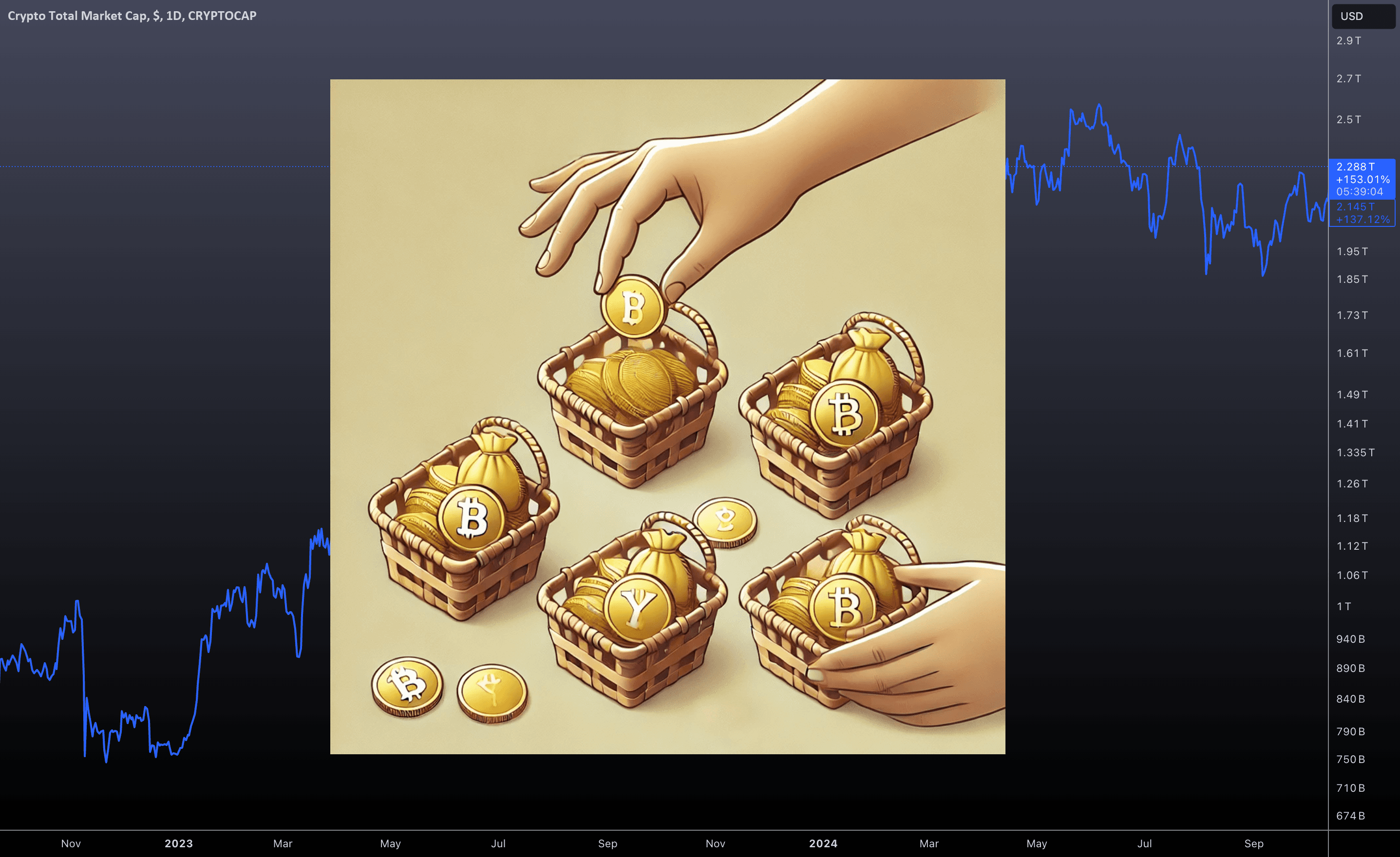
Cryptocurrency markets are known for their volatility, where prices can rise and fall dramatically within a short period. To manage the risks and capitalize on potential gains, diversifying your cryptocurrency portfolio is crucial. Just as in traditional investing, spreading your investments across different crypto assets helps reduce exposure to extreme price movements in any single asset and ensures you can benefit from the growth of various sectors within the market. In this idea, we’ll explore the concept of crypto diversification, the importance of spreading risk, and a recommended percentage allocation for building a balanced portfolio across Bitcoin, Ethereum, altcoins, and meme coins. Why Crypto Diversification Matters Risk Management: Cryptocurrencies are notoriously volatile. By diversifying, you reduce the risk of one asset dramatically impacting your portfolio. If one cryptocurrency underperforms or crashes, others might perform well enough to offset potential losses. Exposure to Different Technologies: The cryptocurrency space is vast, with Bitcoin leading as a store of value, Ethereum as a smart contract platform, and altcoins offering innovations in areas like decentralized finance (DeFi), NFTs, and blockchain scalability. Diversification allows you to participate in the growth of these different technologies. Hedge Against Market Swings: Different cryptocurrencies may react to market conditions in various ways. For example, during market corrections, Bitcoin and Ethereum might drop less sharply than smaller altcoins or meme coins. A diversified portfolio allows you to hedge against such market swings. Suggested Crypto Portfolio Diversification When it comes to diversifying your crypto portfolio, a strategic approach can help you balance between established coins, emerging altcoins, and more speculative assets. Here’s an example of a diversified crypto portfolio with percentage allocations: 1. 50% Bitcoin (BTC) Bitcoin is often referred to as "digital gold" and is considered the most stable and established cryptocurrency. As the largest cryptocurrency by market capitalization, it has the least volatility compared to altcoins and meme coins. A 50% allocation to Bitcoin provides a solid foundation for your portfolio, acting as a safer hedge in the volatile world of crypto. 2. 20% Ethereum (ETH) Ethereum is the second-largest cryptocurrency and the leading platform for decentralized applications (dApps), smart contracts, and DeFi protocols. With its growing ecosystem and the shift to Ethereum 2.0 (which promises greater scalability), Ethereum offers significant growth potential while maintaining more stability than smaller altcoins. A 20% allocation in Ethereum allows you to participate in the innovation and expansion of decentralized finance and other blockchain applications. 3. 25% Altcoins: Altcoins are any cryptocurrencies other than Bitcoin, many of which offer unique technological innovations. For this part of the portfolio, you could include assets such as SOL, FET, INJ, UNI, LINK, etc. Allocating 25% of your portfolio to altcoins offers exposure to innovative technologies with potentially high returns, though they come with higher risks compared to Bitcoin or Ethereum. 4. 5% Meme Coins (DOGE, SHIB, etc.) Meme coins like Dogecoin (DOGE) or Shiba Inu (SHIB) are speculative assets that often gain value due to community support, social media hype, or celebrity endorsements. They are extremely volatile, with the potential for short-term gains but also significant risks. Keeping only 5% of your portfolio in meme coins ensures you don’t overexpose yourself to their high volatility, while still allowing you to benefit if these coins surge in value. Example of a Diversified Crypto Portfolio Allocation Let’s assume you have $10,000 to invest in cryptocurrencies. Here's how you might allocate your funds based on the diversification strategy above: $5,000 in Bitcoin (50%) $2,000 in Ethereum (20%) $2,500 in Altcoins (25%) $500 in Meme Coins (5%) This allocation offers a balanced approach, giving you exposure to the relative safety of Bitcoin and Ethereum while also allowing you to take advantage of the potential high growth from altcoins and meme coins. Why This Allocation Strategy Works - Stability with Growth Potential: With 50% allocated to Bitcoin and 20% to Ethereum, you are investing in two of the most established and widely adopted cryptocurrencies. These are often seen as the "safer" options in the crypto world, and their long-term potential is generally considered strong. - Exposure to Innovation: The 25% allocation to altcoins provides exposure to emerging sectors like DeFi, AI, and blockchain interoperability. While altcoins tend to be more volatile, they offer significant growth potential if their underlying technologies gain widespread adoption. - High-Risk, High-Reward: The 5% allocation to meme coins adds a speculative aspect to the portfolio. Meme coins have a history of spiking in value, often due to online hype. Although risky, keeping a small portion of your portfolio in these assets can offer the opportunity for outsized gains while limiting your risk. Key Tips for Managing a Diversified Crypto Portfolio - Rebalance Regularly: The crypto market is highly volatile, and the value of different assets can fluctuate dramatically. Periodically rebalance your portfolio to ensure that your allocations remain aligned with your goals. For example, if the value of your meme coins spikes, they might occupy a larger percentage of your portfolio than desired. Rebalancing ensures that you take profits and stick to your original diversification strategy. - Do Your Own Research (DYOR): While diversification helps mitigate risk, it's essential to research the coins you're investing in. Don’t blindly invest in an asset just because it’s trending. Understand the project, its use case, the team behind it, and its long-term potential. - Avoid Over-Diversification: While diversification is important, spreading your investments too thin can dilute your returns. Focus on quality projects rather than trying to invest in every available cryptocurrency. - Have a Long-Term Mindset: The crypto market can be volatile in the short term, but having a long-term mindset is critical for success. Don’t panic during market dips—if you have a well-diversified portfolio, you’re better positioned to ride out the volatility and potentially benefit from long-term growth. Diversifying your cryptocurrency portfolio is a smart strategy for managing risk and taking advantage of the crypto market's various opportunities. A balanced allocation—such as 50% Bitcoin, 20% Ethereum, 25% altcoins, and 5% meme coins—helps you mitigate the risks of volatility while allowing you to participate in the growth of different sectors.

H
HexaTrades
Oct 19, 2024
70
AAPL — 5 Common Mistakes New Traders Must Avoid
NASDAQ:AAPL1M
Education

5 Common Mistakes New Traders Must Avoid

Trading in the financial markets can be an exciting journey, but it's not without its challenges. Many new traders often make common mistakes that can lead to losses and frustration. Understanding these mistakes is essential for developing a successful trading strategy. In this idea, we will discuss the top five mistakes new traders make and provide practical tips on how to avoid them. By being aware of these pitfalls, you can improve your trading skills and work towards achieving your financial goals. 1. Lack of a Trading Plan Mistake: Many new traders dive into trading without a well-defined plan. They often trade based on emotions, tips from friends, or market hype, which can lead to inconsistent results and unnecessary losses. Solution: Develop a comprehensive trading plan that outlines your trading goals, risk tolerance, entry and exit strategies, and criteria for selecting trades. A good plan should also include guidelines for risk management, such as how much capital you are willing to risk on each trade. Stick to your plan, and avoid making impulsive decisions based on market fluctuations or emotions. Key Elements of a Trading Plan: -Objectives: Define what you aim to achieve (e.g., short-term gains, long-term investment). -Risk Management: Determine how much you are willing to lose on a single trade and set stop-loss orders accordingly. -Trading Strategies: Decide on the type of analysis you will use (technical, fundamental, or a combination). 2. Ignoring Risk Management Mistake: New traders often underestimate the importance of risk management, leading to excessive losses. They may over-leverage their positions or fail to set stop-loss orders, which can result in significant financial damage. Solution: Implement strict risk management rules. A common rule of thumb is to risk no more than 1-2% of your trading capital on a single trade. This approach allows you to withstand several losing trades without depleting your account. Use stop-loss orders to limit your losses and consider using trailing stops to protect profits as trades move in your favor. Tips for Risk Management: -Position Sizing: Calculate the appropriate size of your trades based on your risk tolerance. -Stop-Loss Orders: Always set a stop-loss order to exit a trade if it moves against you. -Diversification: Avoid putting all your capital into a single trade or asset. 3. Overtrading Mistake: In an attempt to make quick profits, new traders often engage in overtrading. This can result from the desire to recover losses or the excitement of seeing trades executed, leading to poor decision-making and increased transaction costs. Solution: Set specific criteria for entering and exiting trades, and resist the urge to trade more frequently than necessary. Focus on quality over quantity. It's better to wait for high-probability setups than to force trades that don’t meet your criteria. Strategies to Avoid Overtrading: - Limit Trading Frequency: Define a maximum number of trades per day or week. - Review Trades: After each trading session, review your trades to assess whether they adhered to your trading plan. - Take Breaks: If you find yourself feeling overwhelmed or impulsive, take a break from trading to reset your mindset. 4. Emotional Trading Mistake: Emotional trading occurs when traders let their feelings dictate their decisions. Fear, greed, and frustration can lead to impulsive trades, often resulting in losses. Solution: Practice emotional discipline. Recognize that emotions can cloud your judgment and lead to poor trading decisions. Use techniques such as journaling to reflect on your trading experiences and identify emotional triggers. Techniques to Manage Emotions: -Set Realistic Expectations: Understand that losses are a part of trading, and not every trade will be profitable. -Develop a Routine: Establish a pre-trading routine to calm your mind and focus on your trading plan. -Mindfulness Practices: Consider techniques such as meditation or deep-breathing exercises to manage stress and maintain focus. 5. Neglecting Market Research and Education Mistake: New traders sometimes jump into trading without sufficient knowledge about the markets, trading strategies, or economic indicators. This lack of understanding can lead to poor decision-making. Solution: Commit to continuous learning. Take advantage of the wealth of educational resources available online, such as webinars, articles, and trading courses. Stay updated with market news and analysis to understand the factors influencing price movements. Steps for Education: Read Books: Invest time in reading books on trading, market psychology, and investment strategies to deepen your understanding and broaden your knowledge base. Practice with a Demo Account: Before trading with real money, use a demo account to practice your strategies in a risk-free environment. Join Trading Communities: Engage with other traders on platforms like TradingView, where you can share insights and learn from each other. Follow Experts: Subscribe to trading blogs, YouTube channels, or podcasts from experienced traders. Trading is a journey that requires discipline, patience, and a commitment to continuous learning. By avoiding these common mistakes and implementing effective strategies, new traders can enhance their trading skills and improve their chances of success in the financial markets. Remember, every trader faces challenges, but those who learn from their experiences and adapt will ultimately thrive.

H
HexaTrades
Oct 18, 2024
50
BTCUSD — This One Emotion Could Be Destroying Your Trading Profits
CRYPTO:BTCUSD1M
Education

This One Emotion Could Be Destroying Your Trading Profits

In the world of trading, emotions play a pivotal role in shaping decision-making, and one of the most powerful and potentially dangerous emotions traders face is GREED . Greed, when left unchecked, can lead to impulsive decisions, high-risk behaviors, and significant losses. On the flip side, mastering greed and learning to manage it can make you a more disciplined and successful trader. In this article, we will explore what greed in trading looks like, how it affects performance and practical strategies for managing it. Greed in Trading? Greed in trading is the overwhelming desire for more – more profits, more wins, more success – often without regard to risk, logic, or a well-structured plan. It can manifest in different ways, such as overtrading, chasing unrealistic returns, holding on to winning positions for too long, or abandoning a proven strategy in the hope of making quick gains. How Greed Manifests in Trading: 📈Overtrading: A greedy trader may take on far more trades than necessary, often without proper analysis or risk management, simply to increase exposure to potential profits. Overtrading increases transaction costs, dilutes focus, and leads to emotional burnout. 🏃‍♂️Chasing Profits: Greed can cause traders to chase after price movements, entering trades impulsively based on fear of missing out (FOMO). This often leads to poor entry points, increased risk, and diminished returns. ⚠️Ignoring Risk Management: A greedy trader might ignore risk parameters like stop losses or over-leverage positions, believing they can maximize profits by taking on more risk. This is a dangerous path, as a single market movement in the wrong direction can wipe out large portions of capital. ⏳Failure to Exit: Holding on to winning trades for too long is another sign of greed. Instead of securing profits according to a trading plan, traders might hold positions with the hope that prices will continue to rise indefinitely, only to see their gains evaporate when the market reverses. How Greed Affects Trading Performance Greed can distort your decision-making process. It leads to overconfidence and clouds judgment, causing you to believe that the market will always behave in your favor. This overconfidence pushes traders to abandon their strategies or take unnecessary risks, resulting in: Emotional Trading: The trader begins to react emotionally to every small market movement, making decisions based on feelings rather than rational analysis. Impaired Risk Management: Greed often blinds traders to the importance of managing risk, which is the backbone of long-term trading success. A single high-risk move inspired by greed can erase months or years of gains. Missed Opportunities: By focusing on unrealistic gains or trying to squeeze every bit of profit from a trade, a trader may miss more reliable and smaller, but consistent, opportunities. The Psychology Behind Greed Greed is rooted in our psychology and is amplified by the very nature of the financial markets. Trading offers the possibility of instant gains, which triggers a dopamine response in the brain, making us feel rewarded. The lure of quick profits encourages traders to take greater risks or deviate from their trading plans in pursuit of bigger wins. However, the emotional high from successful trades is often short-lived. Traders can become addicted to this feeling, pushing them to take on more trades or stay in positions for longer than they should. Eventually, this leads to bad habits and unsustainable trading practices How to Manage Greed in Trading While greed is a natural human emotion, it can be controlled with the right mindset and strategies. Here are some practical ways to manage greed in trading: 1. Set Realistic Goals The first step in managing greed is setting clear, realistic trading goals. Rather than aiming for massive, one-time profits, focus on steady, consistent returns. Define what "success" looks like for you on a daily, weekly, and monthly basis. Having measurable goals helps anchor your trading behavior and keeps you grounded. Example: Instead of aiming for a 100% return in a short period, set a more achievable target like 5%-10% monthly. This may not sound as exciting, but it's more sustainable in the long term. 2. Stick to a Trading Plan A well-defined trading plan is your safeguard against impulsive decisions driven by greed. Your plan should outline entry and exit points, stop-loss levels, and risk-reward ratios. By adhering strictly to your plan, you can resist the temptation to hold on to trades longer than necessary or jump into trades impulsively. Key elements of a good trading plan include: -Entry and exit criteria are based on analysis, not emotion -Risk management rules (like how much to risk per trade, stop-loss settings) -Profit-taking strategy, deciding when to lock in gains 3. Use Risk Management Techniques Effective risk management is the antidote to greed. By setting strict risk parameters, you limit the impact of poor decisions driven by emotions. Always use stop-loss orders to protect yourself from significant losses, and never risk more than a small percentage of your trading capital on any single trade (example 1-2%). Avoid over-leveraging, as leverage amplifies both profits and losses. While it may be tempting to use high leverage to chase bigger gains, it significantly increases the risk of catastrophic losses. 4. Take Profits Regularly One way to counteract greed is to develop a habit of taking profits regularly. When you set profit targets ahead of time, you can ensure that you lock in gains before they evaporate. Don’t wait for an unrealistic price surge. Exit trades once your profit target is reached, or scale out by selling a portion of your position as the trade progresses. 5. Practice Emotional Awareness Being aware of your emotional state is crucial in trading. Take the time to self-reflect and recognize when greed is influencing your decisions. Keep a trading journal to track not just your trades, but also your emotions during the process. This will help you identify patterns and emotional triggers that lead to poor decisions. Example: After a series of winning trades, you may feel overconfident and tempted to take bigger risks. By noting this in your journal, you can remind yourself to remain disciplined and not deviate from your plan. 6. Focus on Long-Term Success Trading is a marathon, not a sprint. Focus on the long-term process rather than short-term profits. Greed often leads traders to forget that consistent, small gains compound over time. By shifting your mindset to long-term wealth-building, you’re less likely to take excessive risks or engage in reckless behavior. Greed is a natural emotion in trading, but it can be highly destructive if not managed properly. The key to success lies in discipline, risk management, and a well-structured trading plan that aligns with your goals. By understanding the psychological drivers of greed and taking proactive steps to control it, traders can make more rational decisions, protect their capital, and increase their chances of long-term success.
H
HexaTrades
Oct 18, 2024
40
BTCUSD — How to Identify and Trade Flag Patterns Effectively
COINBASE:BTCUSD1W
Education

How to Identify and Trade Flag Patterns Effectively

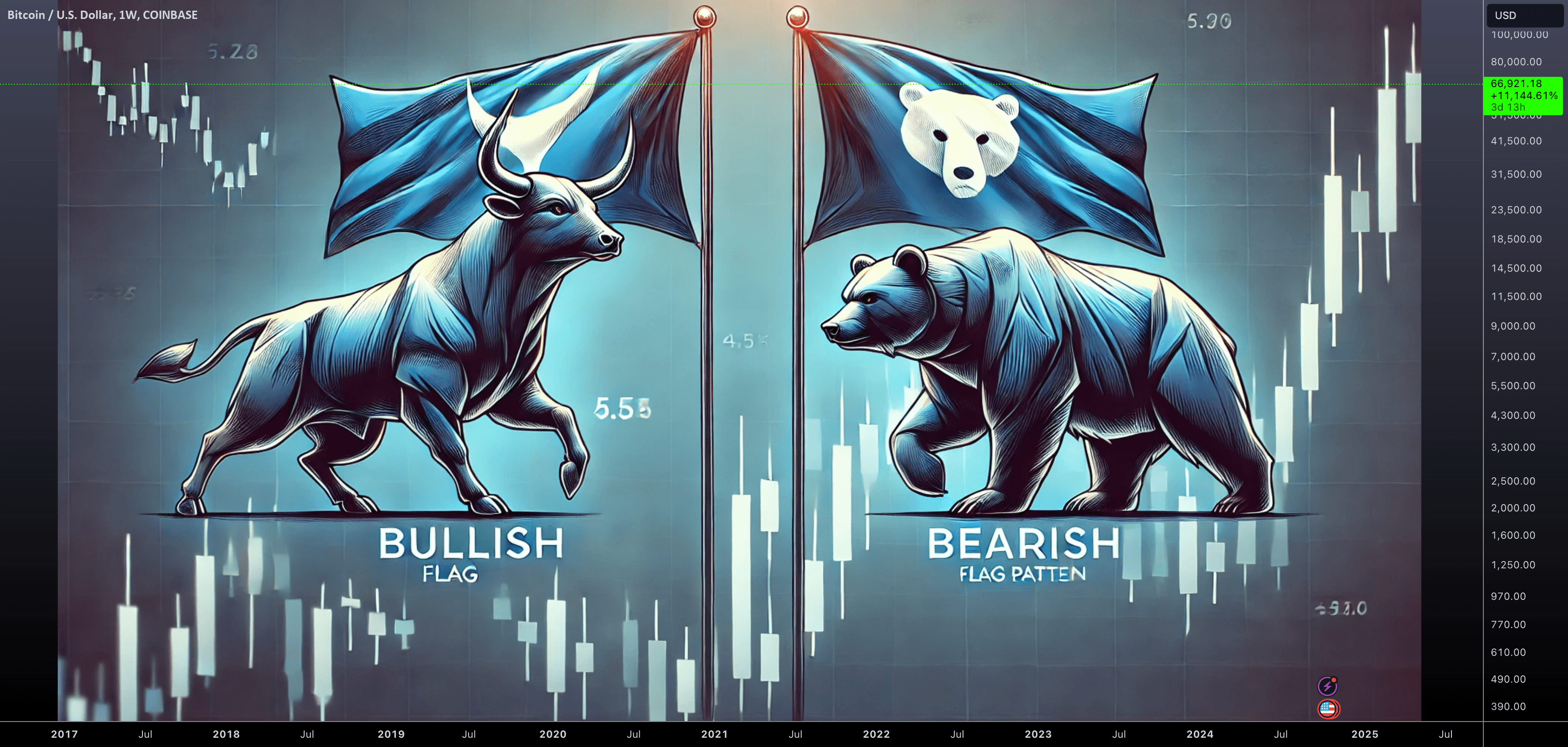
The flag pattern is one of the most effective trading setups in the crypto market, known for its reliability and high probability of continuation in trending markets. Here’s a detailed overview of what a flag pattern is, how to identify it, and why it works so well in crypto trading. What is a Flag Pattern? A flag pattern appears as a brief consolidation following a strong price movement, resembling a rectangular shape. There are two main types of flag patterns: bull flags and bear flags. Bull Flag: This pattern typically forms after a strong upward price movement (the flagpole), followed by a slight pullback or consolidation (the flag) before the price continues its upward trend. The flag usually slopes downward or moves sideways. Example of Bullish Flag Pattern. Bear Flag: Conversely, a bear flag occurs after a significant downward movement, followed by a consolidation that trends slightly upward, indicating a continuation of the downward trend once the price breaks down through the flag. Example of Bearish Flag Pattern. Identifying Flag Patterns To identify a flag pattern, traders look for: 🏳️ Flagpole: This is the initial sharp price movement. 🏳️ Flag Formation: This should be a consolidation phase that lasts from 2-3 candles up to more than ten, depending on the timeframe. 🏳️ Volume Analysis: Ideally, the volume should be higher during the flagpole and lower during the flag consolidation. An increase in volume upon breakout is a strong confirmation of the continuation. Here is the example chart for identifying the flag pattern: Trading the Flag Pattern To trade a flag pattern effectively, follow these steps: 📈 Entry: For a bull flag, consider entering the trade once the price breaks above the upper boundary of the flag. For a bear flag, enter on a break below the lower boundary. 📈 Stop Loss: Place your stop loss just below the flag (for bull flags) or above the flag (for bear flags). 📈 Profit Target: A common target is to measure the height of the flagpole and project that distance from the breakout point. Example chart showing how to place a trade using the flag pattern: Why It Works in Crypto Markets The flag pattern is particularly effective in the crypto market for several reasons: 📊Volatility: Cryptocurrencies are highly volatile, which can create strong price movements leading to clear flag formations. 📈 Trend Continuation: Flags often appear in trending markets, where there’s a significant amount of bullish or bearish momentum. 🧠 Psychological Factors: Traders recognize these patterns, leading to increased buying or selling pressure at breakout points. Example of Bullish and Bearish Flag Pattern: Bullish Flag: Bearish Flag: Flag patterns are highly effective in crypto trading, offering clear signals for trend continuation. They are especially useful in volatile markets, providing reliable entry and exit points. By identifying strong momentum during the breakout and combining it with volume analysis, traders can use flag patterns to make well-informed, high-probability trades.

H
HexaTrades
Oct 17, 2024
50
NVDA — FOMO: The Silent Killer of Trading Success
NASDAQ:NVDA1M
Education

FOMO: The Silent Killer of Trading Success

In trading, one of the most destructive emotions is the Fear of Missing Out (FOMO). It’s that nagging feeling that you’re missing a huge opportunity as the market makes a move without you. For traders, FOMO can be a dangerous mindset, leading to impulsive decisions, chasing price action, and ultimately, heavy losses. Understanding and mastering FOMO is essential for success in the market. What is FOMO in Trading? FOMO is the psychological pressure that traders feel when they see a market move happening without them. It’s driven by the fear that they will miss out on potential gains or that others are making profits while they sit on the sidelines. This emotional response can lead to irrational trading behavior such as: Chasing Trades: Entering a trade too late, after most of the move has already occurred. Overtrading: Opening too many positions in fear of missing opportunities. Ignoring Your Strategy: Making decisions based on emotion rather than following a disciplined plan. FOMO is a natural human emotion, but in trading, it can lead to poor risk management and eventual losses. Strategies to Overcome FOMO in Trading 1. Develop a Solid Trading Plan A well-structured trading plan can be your best defense against FOMO. Your plan should include criteria for trade entries, exits, and risk management. Stick to it no matter what the market is doing. Trust your analysis and strategy instead of chasing moves based on emotion. 2. Focus on Process, Not Profit Trading is a marathon, not a sprint. Focusing on the process rather than the short-term results will help you stay disciplined. Remember that no single trade defines your success. Over time, consistency in following your strategy will lead to better results. 3. Practice Mindfulness and Emotional Control Successful trading requires mental clarity. Practice mindfulness techniques to control your emotions during periods of heightened market activity. Being aware of your emotional triggers can help you pause, step back, and avoid impulsive decisions. 4. Limit Screen Time Watching the markets non-stop can exacerbate FOMO. If you find yourself becoming too anxious or eager to trade, consider limiting your screen time. Set alerts for when a trade setup from your plan is triggered, so you don’t feel the need to constantly monitor price movements. 5. Keep a Trading Journal Tracking your trades and the emotions behind them can provide valuable insights into your decision-making process. A trading journal helps you reflect on FOMO-driven trades, identify patterns, and learn from your mistakes. 6. Accept That You Will Miss Some Opportunities No trader can catch every move. Accepting that the market will always present new opportunities is key to staying grounded. Rather than fixating on what you missed, focus on preparing for the next setup that aligns with your strategy. FOMO is a powerful force in trading, but with the right mindset and strategies, you can learn to control it. By developing a strong trading plan, focusing on process over profits, and practicing emotional discipline, you can avoid the pitfalls of FOMO and improve your overall performance. Remember, the markets will always be there, and so will new opportunities. Stay patient, stay disciplined, and success will follow.

H
HexaTrades
Oct 16, 2024
668
BTCUSD — Mastering Trading Psychology: 5 Key Principles for Success
CRYPTO:BTCUSD1M
Education

Mastering Trading Psychology: 5 Key Principles for Success

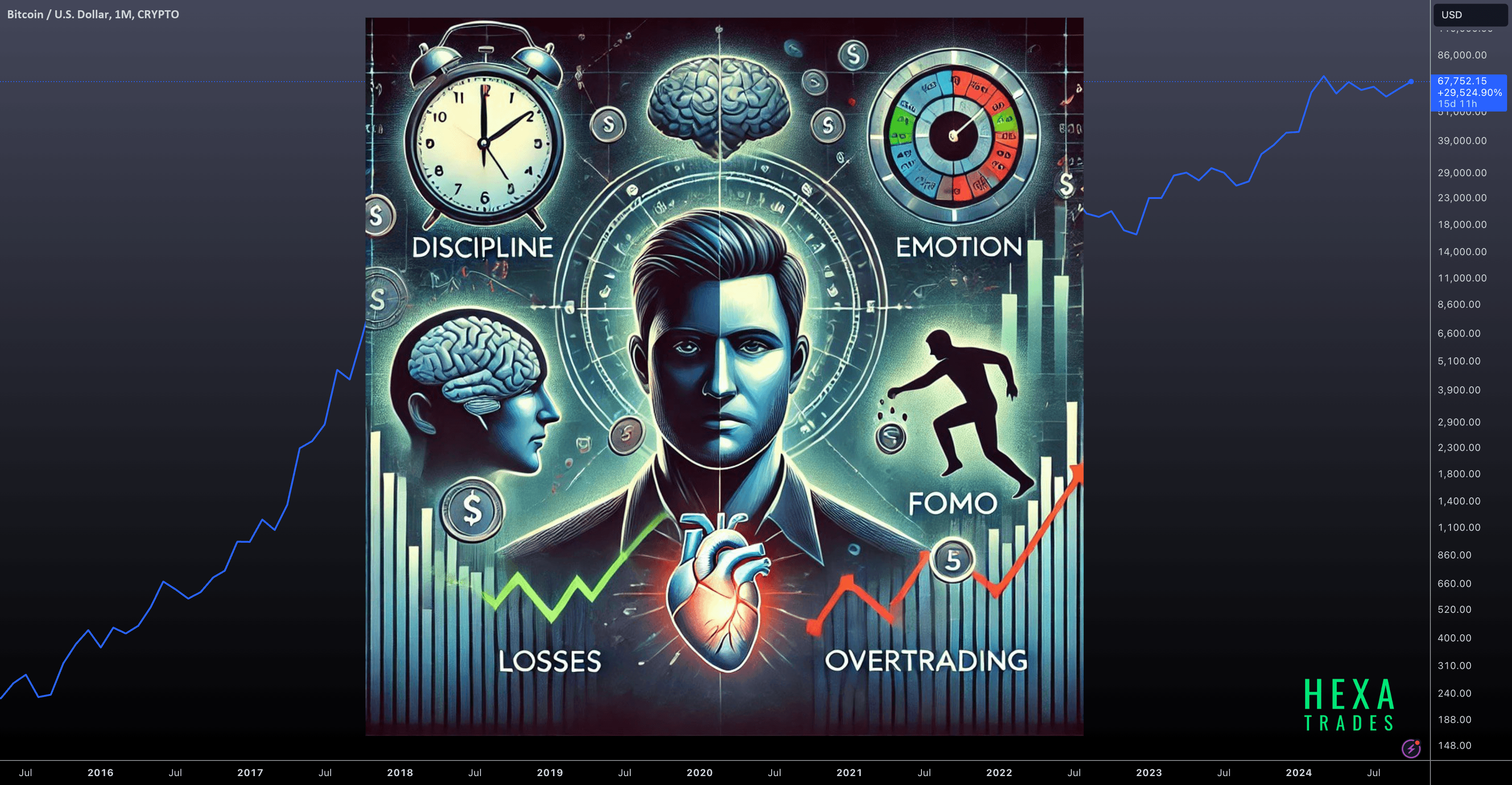
In the world of trading, success isn’t just about mastering charts, patterns, or technical analysis. One of the most critical, yet often overlooked, aspects of trading is the mental game trading psychology. The ability to manage emotions, stay disciplined, and make rational decisions under pressure is what sets consistently profitable traders apart from the rest. Trading can evoke strong emotions like fear, greed, and frustration, leading to impulsive actions and costly mistakes. To succeed in the long run, traders need to develop a mindset that helps them remain objective, stick to their strategies, and avoid letting emotions dictate their decisions. Below are five key principles of trading psychology that every trader should master to achieve consistent success in the markets 1. Stay Emotionally Detached from Trades Emotional trading often leads to impulsive decisions, such as chasing losses or being driven by greed. Fear and greed are two of the biggest psychological challenges traders face. Treat trading as a business. Stick to your strategy and avoid getting attached to a single trade. Whether a trade wins or loses, view it as part of a larger plan. Having preset rules for when to enter and exit helps reduce emotional involvement. 2. Develop a Disciplined Routine Discipline is the backbone of consistent trading success. Without it, traders are more likely to deviate from their plan and make irrational decisions. Create a clear trading plan that includes entry, exit, and risk management strategies. Follow this plan consistently, regardless of market conditions. The key to success is sticking to a well-thought-out system, not trying to "beat the market." 3. Accept Losses as Part of Trading Losses are inevitable in trading. The fear of losing money can cause traders to exit trades prematurely or avoid making a move altogether, missing out on potential gains. Understand that losses are a natural part of the trading process. Focus on managing risk and limiting losses rather than trying to avoid them entirely. If you maintain a good risk-reward ratio, a few losses won't derail your overall performance. 4. Avoid the Influence of FOMO (Fear of Missing Out) FOMO can cause traders to jump into trades too late, often at unsustainable prices. This leads to poor decision-making and higher chances of loss. Focus on your own strategy and ignore market hype or emotional pressure from others. The market will always present new opportunities. Stick to your rules and don’t chase after moves you didn’t anticipate. 5. Maintain Patience and Long-Term Focus The desire for quick profits can lead to overtrading or taking unnecessary risks. Trading is a marathon, not a sprint. Stay patient and trust the process. Stick to your strategy and avoid rushing into trades just to stay active. Wait for high-quality setups that align with your plan. Remember, consistency over time leads to long-term success. These principles help maintain emotional control, encourage rational decision-making, and lead to more sustainable trading outcomes in the long run. By mastering the psychology of trading, you'll be better equipped to navigate the market’s ups and downs. Regards Hexa
H
HexaTrades
Oct 16, 2024
100
XAUUSD — Never Risk What You Can't Afford to Lose
OANDA:XAUUSD1W
Education

Never Risk What You Can't Afford to Lose

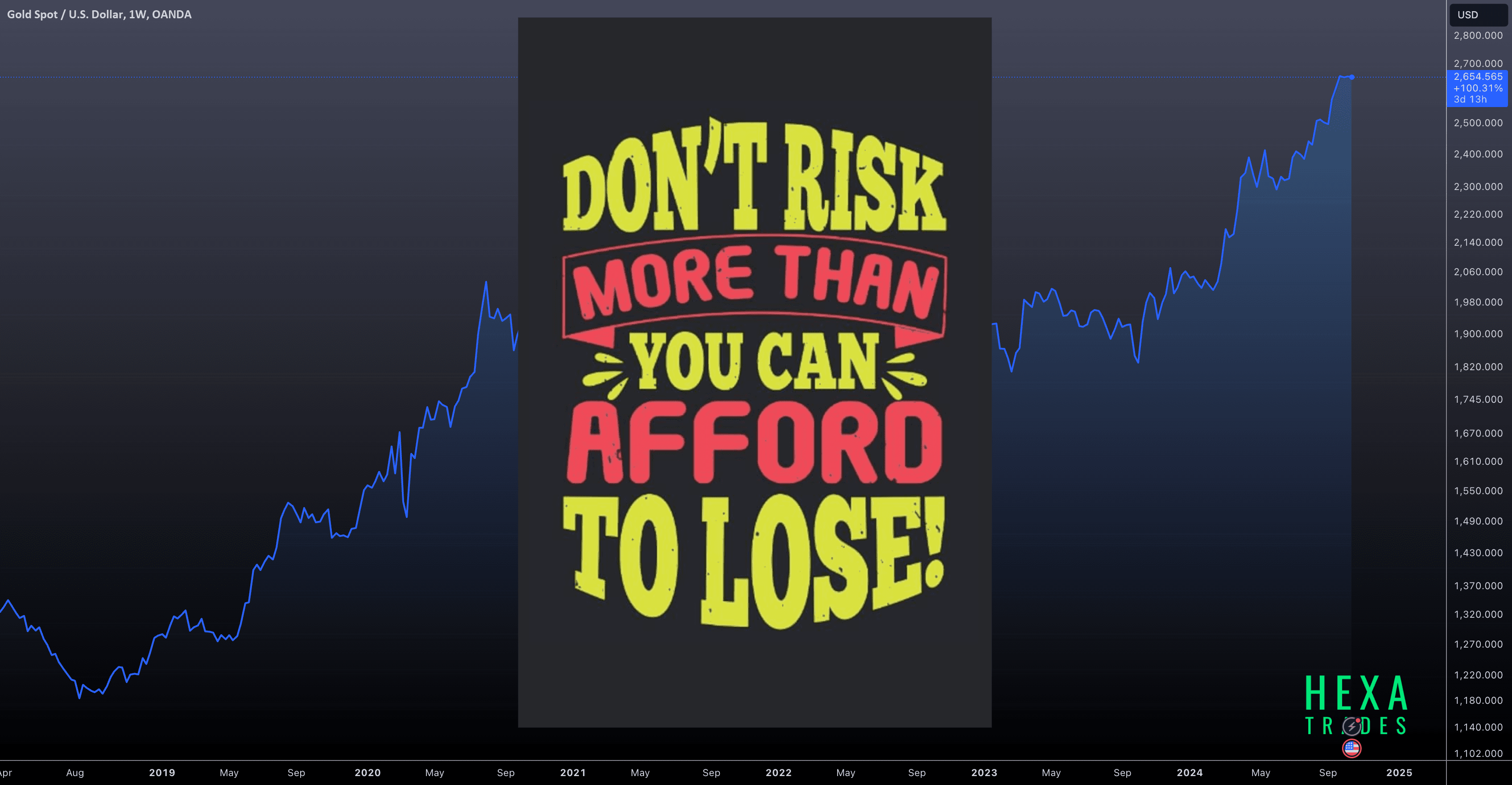
When it comes to trading whether you're in crypto, stocks, forex, or any other market—the most important rule is: 'Never risk more than you can afford to lose'. This is the foundation of successful trading and critical to long-term sustainability in the markets. In this idea, I'll break down why this principle is so crucial and how to apply it effectively to your trading strategy. Why is it so important? Trading is all about managing risk. The markets, particularly crypto, can be extremely volatile, where sharp price movements are common. While volatility can create big opportunities, it also introduces significant risk. Without a proper risk management strategy, a single bad trade could wipe out a large portion—or even all—of your capital. If you're trading with money you can't afford to lose, you're putting yourself in a dangerous position, both financially and emotionally. It may cause you to: Trade with fear: When you're overly concerned about losing money, your decision-making becomes clouded. You may hesitate to execute a solid strategy or exit a trade too soon out of panic. Trade with greed: Conversely, you may take unnecessary risks hoping for a quick win, leading to even bigger losses. Lose control: If your losses are too large, you may be tempted to "chase" those losses by taking on even riskier trades in an attempt to recover, which often backfires. How to apply this principle in your trading 1. Determine Your Risk Capital: Risk capital is the amount of money you’re willing to lose without it negatively impacting your financial situation or lifestyle. This is critical because trading should never involve money meant for essential expenses (rent, bills, education, etc.). The amount of risk capital will vary for everyone based on their financial situation and risk tolerance. Remember, trading with money you can’t afford to lose leads to stress and poor decision-making. 2. Use the 1-2% Rule for Position Sizing: One of the most effective ways to control risk is to apply the 1-2% rule. This means never risking more than 1-2% of your total capital on any single trade. For example, if your trading account is $10,000, you should only risk $100 to $200 per trade. This small risk per trade ensures that even a series of losing trades won’t severely impact your overall account. It’s about staying in the game, as even the best traders experience losses. 3. Set Stop-Loss Orders on Every Trade: Using a stop-loss is one of the most practical tools to limit potential losses. A stop-loss order automatically closes your trade if the market moves against you, protecting you from excessive losses. It's crucial to place stop-losses at logical levels based on technical analysis, rather than random percentages. This ensures you're exiting trades when the setup has failed, not just due to minor market fluctuations. For example, if you're buying Bitcoin at $30,000, and your analysis shows that support is at $29,500, you might set your stop-loss slightly below that level, ensuring your downside is protected. 4. Risk/Reward Ratio: Always assess the risk/reward ratio before entering a trade. The risk/reward ratio measures how much you're risking to achieve a potential reward. A commonly used ratio is 1:2, meaning for every $1 you're risking, you're aiming to make $2. This approach ensures that even if you're wrong on half of your trades, you can still be profitable in the long term. By ensuring that your potential profit is always greater than your potential loss, you create a solid balance of risk management. 5. Leverage: A Double-Edged Sword In crypto and other financial markets, leverage can amplify both gains and losses. While leverage can increase your buying power, it also multiplies the risk. For example, using 10x leverage means that a 10% adverse move could wipe out your entire position. If you use leverage, make sure you do so cautiously. Low leverage (such as 2x-3x) is generally safer and allows you to better manage your risk without being exposed to devastating losses. 6. Diversify Your Positions: Diversification is another key component of risk management. Don't put all your money into a single trade or asset. Spread your capital across multiple trades or cryptocurrencies to minimize exposure to one particular asset’s performance. This way, if one trade or asset doesn’t go as planned, the others might still perform well, balancing out your risk. 7. Avoid FOMO and Emotional Trading: Fear of missing out (FOMO) is one of the most common emotional traps in trading. Jumping into a trade just because the market is skyrocketing often leads to bad decisions and, ultimately, losses. Stick to your plan and make decisions based on analysis, not emotions. Remember, the market will always present new opportunities. 8. Plan for Losses: Losses Are Part of Trading: Even the most successful traders incur losses—it's an inevitable part of trading. The goal isn’t to avoid losses altogether but to manage them effectively. Knowing when to cut losses and move on is crucial. Every trade should have a plan, including both the target profit and the acceptable level of loss. Your number one priority as a trader is to protect your capital. Always remember that preserving your capital is the key to staying in the market long enough to find those winning trades. Risking money you can’t afford to lose leads to poor decision-making, emotional trading, and ultimately failure. By limiting your risk on every trade, using stop-losses, maintaining a balanced risk/reward ratio, and managing leverage, you can ensure that you're trading responsibly and in control of your long-term success. Regards Hexa

H
HexaTrades
Oct 15, 2024
32
BTCUSD — Why Smart Traders Trust the Risk-to-Reward Ratio!
COINBASE:BTCUSD1D
Education

Why Smart Traders Trust the Risk-to-Reward Ratio!

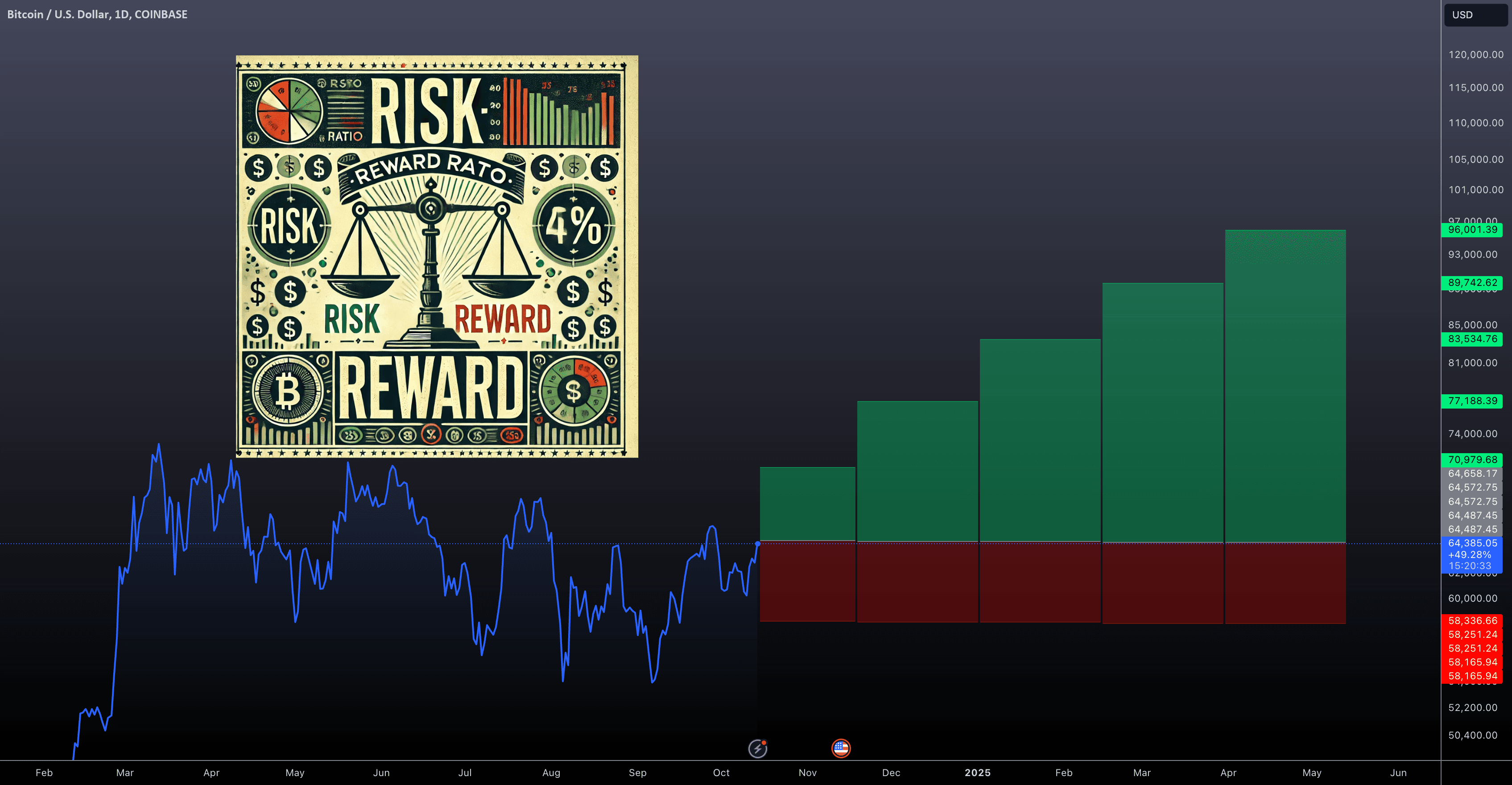
Risk Reward Ratio In the world of trading, profit potential alone doesn't define success. More important than chasing profits is understanding and managing risk. This is where the Risk-to-Reward Ratio becomes a vital component of every trading strategy. Traders who ignore this concept often find themselves on the losing end, even when they win more trades than they lose. On the other hand, those who master the art of managing their risk relative to their potential reward tend to find consistent success over the long run. In this idea, we'll explore why the Risk-to-Reward Ratio is crucial, how to calculate it, and why traders should prioritize it for sustainable profitability. What is the Risk-to-Reward Ratio? The Risk-to-Reward Ratio compares the amount of risk a trader takes on in a trade (the potential loss) to the potential reward (the possible gain). Simply put, it tells you how much you're risking for every dollar you're aiming to make. For example, if you're willing to risk $100 on a trade but expect a potential reward of $300, your R ratio is 1:3. This means for every $1 you're risking, you aim to make $3. How to Calculate the Risk-to-Reward Ratio: Determine the Risk: This is the distance between your entry price and your stop-loss level. Determine the Reward: This is the distance between your entry price and your take-profit level. The formula is: Risk to Reward Ratio = Potential Profit/Potential Loss Why is the Risk-to-Reward Ratio So Important? Maintains Profitability Despite Losses: No trader can win 100% of the time. A favorable R allows profitability even with a low win rate. For instance, with an R of 1:3, winning just 25% of your trades can break you even. Limits Emotional Trading: Emotional decisions often lead to poor trading choices. A clear R helps enforce discipline, making it easier to adhere to your trading plan and reducing impulsive actions based on fear or market fluctuations. Improves Trade Selection: Not every trading opportunity is worth taking. A favorable R encourages selectivity, focusing on trades that offer high potential returns relative to risk. This helps eliminate low-quality trades, leading to a more profitable strategy. Balances Risk and Reward: Finding the right balance between risk and reward. A favorable R ensures you’re not risking too much for too little gain, allowing winning trades to cover losses over time. Improves Long-Term Consistency: A solid R creates a sustainable trading system. Maintaining discipline and risking only a small percentage of your capital helps protect your account during losing streaks. Combined with a strong strategy, this fosters a reliable edge in the market. Risk-to-Reward Table and Breakeven Win Rates To understand how different R ratios affect your breakeven point, let's look at the table below. It shows the win rate required to break even, based on different Risk-to-Reward ratios. ​https://www.tradingview.com/x/5GZcSrlz/ -if your R ratio is 1:1, you need to win 50% of your trades just to break even. -With a R ratio of 1:3, you only need to win 25% of your trades to break even. -A higher risk-to-reward ratio reduces the pressure to win more trades because when you do win, your reward is significantly larger than the risk you took. This table highlights the power of having a higher R ratio. Even if your win rate is low, you can still remain profitable as long as your winners significantly outweigh your losers. Examples of Risk-to-Reward in Real Trading Let’s say you're considering a long trade on Bitcoin. Your analysis shows the entry price should be $64,000, with a stop-loss at $62,500 (a $1,500 risk). Your target price is $68,000, giving you a potential profit of $4,000. Risk: $1,500 Reward: $4,000 Risk Reward Ration = 1500/4000 = 2.67 In this case, your R ratio is 1:2.67, meaning that for every $1 you risk, you aim to make $2.67. If you only won 30% of your trades, you could still be profitable over the long term because of the higher reward relative to your risk. Mastering the Risk-to-Reward Ratio is essential for traders seeking long-term success. By understanding and implementing this concept, traders can effectively manage risk, improve trade selection, and maintain profitability, ensuring a more sustainable approach to trading. Regards Hexa

H
HexaTrades
Oct 14, 2024
332
BTCUSD — The 1% Rule: A Key to Long-Term Trading Success
CRYPTO:BTCUSD1W
Education

The 1% Rule: A Key to Long-Term Trading Success

Understanding the 1% Risk Management Strategy in Trading Effective risk management is the backbone of successful trading, helping traders preserve capital and avoid emotional decision-making. The 1% risk management strategy is one of the most widely used approaches, aimed at limiting the potential loss on any single trade to 1% of your total trading capital. Let’s break down how this strategy works and why it’s essential for both novice and experienced traders. What Is the 1% Risk Rule? The 1% risk rule ensures that a trader never risks more than 1% of their account balance on a single trade. For example, if you have $20,000 in your account, you would limit your risk to $200 on any given trade. The idea behind this rule is to safeguard your account from catastrophic losses that could occur from consecutive losing trades . How to Apply the 1% Risk Rule To apply the 1% rule effectively, you need to combine position sizing with stop-loss orders. Here’s how you can implement this strategy: 1. Determine Your Account Risk: Calculate 1% of your trading capital. For example, with a $10,000 account, 1% equals $100. This is the maximum amount you’re willing to lose on a single trade. 2. Set a Stop-Loss: A stop-loss helps cap your losses at the 1% threshold. If you’re buying shares of a stock at $50 and decide on a stop-loss 1 point below, your “cents at risk” is $1 per share. If you’re willing to lose $100, you can buy 100 shares ($100 / $1 per share risk). 3. Position Sizing: The size of your trade depends on the risk per share. By determining your stop-loss level, you calculate how many shares you can buy to keep your total loss within the 1% limit. This process prevents you from taking excessively large positions that could lead to significant losses . Why the 1% Rule Is Effective The 1% rule is effective because it keeps your potential losses small relative to your total capital. Even during periods of losing streaks, this strategy prevents large drawdowns that could lead to emotional trading or complete account wipeout. For instance, if you experience a string of ten losing trades in a row, you would only lose 10% of your capital, giving you plenty of opportunities to recover without significant emotional stress . Advantages of the 1% Risk Rule 1. Protects Your Capital: By risking only a small portion of your account on each trade, you prevent significant losses that could deplete your account. 2. Encourages Discipline: Sticking to the 1% rule helps instill discipline, keeping traders from making impulsive trades that deviate from their trading plan. 3. Provides Flexibility: The rule works for all market conditions and strategies, whether you are trading stocks, forex, or other assets. As long as you adhere to the 1% threshold, you can trade confidently without fear of losing too much on any single trade . The Risk-Reward Ratio An essential component of the 1% rule is pairing it with a favorable risk-reward ratio. Traders typically aim for a minimum reward of 2 to 3 times the risk. For example, if you’re risking $100 on a trade, you should aim for at least a $200 to $300 profit. This ensures that even with a 50% win rate, your profitable trades will outweigh your losses . Conclusion The 1% risk management strategy is a powerful tool for minimizing risk and protecting your trading capital. By incorporating proper position sizing, stop-loss orders, and a disciplined approach, you can navigate the market confidently while safeguarding your account from large drawdowns. Whether you’re a day trader or a swing trader, applying this strategy will help you build consistent success over time. By maintaining a focus on risk management, traders can shift their mindset from seeking high returns to preserving capital, which is the key to long-term success in the markets.

H
HexaTrades
Oct 12, 2024
91
BTCUSD — Interpreting RSI (Relative Strength Index)
INDEX:BTCUSD1W
Education

Interpreting RSI (Relative Strength Index)

The Relative Strength Index (RSI) is a momentum indicator that measures the speed and magnitude of price movements. It is a versatile tool that can be used to identify overbought and oversold conditions, as well as divergences and trend strength. Overbought and Oversold Conditions The RSI oscillates between 0 and 100. Traditionally, the RSI is considered overbought when above 70 and oversold when below 30. These levels are not set in stone, and they can vary depending on the security and the market conditions. However, they are a good starting point for identifying potential buying and selling opportunities. Overbought: An RSI reading above 70 indicates that the security is overbought, which means that it has been trading up rapidly and may be due for a correction. However, it is important to note that the RSI can stay in overbought territory for an extended period of time before a correction occurs. Overbought RSI indicator ETHUSD(Day Chart) As you can see in the chart, when the RSI indicator hit the 70 level, the price started dropping continuously. Oversold: An RSI reading below 30 indicates that the security is oversold, which means that it has been trading down rapidly and may be due for a bounce. However, like with overbought conditions, the RSI can stay in oversold territory for an extended period of time before a bounce occurs. Oversold RSI indicator BTCUSD (weekly Chart) As you can see in the chart, when the RSI indicator hit the 30 level, the price started bouncing from the bottom level. The RSI indicator has accurately predicted the bottoms of Bitcoin's major bear markets in 2015, 2018, and 2022. Stay tuned for more updates on this topic. Regards Hexa

H
HexaTrades
Nov 24, 2023
52
BTCUSDT — Bitcoin: The Future Of Money
BINANCE:BTCUSDT1D
Education

Bitcoin: The Future Of Money

Bitcoin, the world's first and most prominent cryptocurrency, has sparked a revolution in the financial landscape, challenging conventional notions of money and paving the way for a decentralized digital economy. Its potential to transform the future of money is undeniable, but its journey towards widespread adoption is still in its early stages. Decentralized Digital Currency Bitcoin's core innovation lies in its decentralized nature. Unlike traditional currencies controlled by central banks, Bitcoin operates on a distributed ledger technology called blockchain, where transactions are recorded across a vast network of computers. This eliminates the need for intermediaries like banks, empowering individuals to take control of their finances and fostering greater financial inclusion. Key Features of Bitcoin Several characteristics make Bitcoin a compelling alternative to traditional currencies: Decentralization: Bitcoin is not controlled by any government or institution, reducing the risk of manipulation and promoting financial independence. Transparency: All Bitcoin transactions are publicly visible on the blockchain, ensuring transparency and accountability. Security: Bitcoin's cryptographic underpinnings make it highly secure, preventing counterfeiting and double-spending. Scarcity: Bitcoin's supply is limited to 21 million coins, preventing inflation and maintaining its value over time. Potential Impact on the Future of Money Bitcoin's potential to transform the future of money is multifaceted: Cross-border payments: Bitcoin can facilitate fast, low-cost international transactions, eliminating the barriers and costs associated with traditional remittance systems. Financial inclusion: Bitcoin can provide financial access to the unbanked and underbanked populations, particularly in developing countries. Innovation in financial services: Bitcoin can foster the development of new financial services and products, such as decentralized finance (DeFi) and micropayments. Challenges and Uncertainties Despite its potential, Bitcoin faces several challenges that could hinder its widespread adoption: Volatility: Bitcoin's value has historically been highly volatile, making it a risky investment and deterring its use as a daily currency. Regulation: Governments worldwide are still grappling with how to regulate cryptocurrencies, creating uncertainty for businesses and investors. Scalability: Bitcoin's transaction processing speed is limited, which could pose a challenge as its usage increases. Adoption by merchants: The acceptance of Bitcoin as a means of payment is still limited, hindering its practicality for everyday transactions. Conclusion: A Promising Future Bitcoin's potential to revolutionize the future of money is evident. Its decentralized nature, security, and transparency offer a compelling alternative to traditional currencies, particularly in areas like cross-border payments and financial inclusion. While challenges such as volatility and regulation remain, Bitcoin's underlying technology and its potential to disrupt the financial landscape make it a force to be reckoned with in the future of money.

H
HexaTrades
Nov 17, 2023
40
BTCUSD — Bitcoin: The World Reserve Currency
INDEX:BTCUSD1M
Education

Bitcoin: The World Reserve Currency

Introduction: The World Reserve currency is a currency that is widely used in international trade and finance. It is held by central banks around the world as part of their foreign exchange reserves. The United States dollar (USD) has been the world reserve currency since the end of World War II. In recent years, there has been growing interest in Bitcoin as a potential world reserve currency. Bitcoin is a digital currency that is decentralized, meaning that it is not controlled by any government or financial institution. It is also highly secure and transparent. Advantages of Bitcoin as a World Reserve Currency There are several advantages to using Bitcoin as a world reserve currency. These include: Decentralization: Bitcoin is decentralized, which means that it is not controlled by any government or financial institution. This makes it resistant to manipulation and censorship. Security: Bitcoin is highly secure, thanks to its use of cryptography. This makes it a safe and reliable store of value. Transparency: All Bitcoin transactions are recorded on a public blockchain, which is a transparent and tamper-proof record of all transactions. This makes Bitcoin a very transparent currency. Scarcity: Bitcoin has a limited supply of 21 million coins. This makes it a scarce asset, which can help to protect its value. Global reach: Bitcoin can be used by anyone in the world, regardless of their location or financial status. This makes it a truly global currency. Challenges to Bitcoin as a World Reserve Currency Despite its advantages, there are also some challenges to using Bitcoin as a world reserve currency. These include: Volatility: Bitcoin is a volatile asset, meaning that its price can fluctuate wildly. This makes it a risky investment for central banks. Adoption: Bitcoin is still not widely adopted by businesses and governments. This makes it difficult to use as a world reserve currency. Regulation: There is currently no clear regulatory framework for Bitcoin. This could pose a challenge for central banks that are considering using Bitcoin as a reserve currency. **Overall, Bitcoin has the potential to be a successful world reserve currency. However, there are still some challenges that need to be addressed before it can be widely adopted. Future of Bitcoin as a World Reserve Currency The future of Bitcoin as a world reserve currency is uncertain. However, there are a number of factors that could contribute to its adoption, including: The continued growth of the digital economy: The digital economy is growing rapidly, and Bitcoin is well-positioned to play a major role in this economy. The increasing adoption of Bitcoin by businesses and governments: As more businesses and governments adopt Bitcoin, it will become more difficult to ignore its potential as a world reserve currency. The development of new Bitcoin-based financial products and services: The development of new Bitcoin-based financial products and services could make Bitcoin more attractive to central banks. It is still too early to say whether Bitcoin will become the world reserve currency. However, it is a serious contender, and it is worth considering the potential benefits and risks of using Bitcoin as a reserve currency. Thanks Hexa

H
HexaTrades
Nov 16, 2023
70
BTCUSD — What is Candlestick Pattern?
BITSTAMP:BTCUSD1D
Education

What is Candlestick Pattern?

Candlestick patterns are a charting technique used by traders to analyze the price movement of financial instruments. They originated in Japan in the 18th century and were used to track the price of rice. The technique was later adapted for trading other assets like stocks, currencies, commodities, and cryptocurrency. Candlestick patterns are an important tool used by traders and investors to analyze the price movement of financial assets. A candlestick is a visual representation of the price movement of an asset during a specific time period. Each candlestick represents the opening, closing, high, and low prices of the asset during the period. The shape and color of the candlestick provide important information about the price movement of the asset. Candlestick patterns are formed by the combination of one or more candlesticks, and they can indicate a potential trend reversal, continuation, or indecision in the market. Some candlestick patterns are based on just one candlestick, while others are based on combinations of two or more candlesticks. A bearish candle (red candle) represents a period of trading where the closing price is lower than the opening price. This indicates that sellers were able to push the price down, indicating a negative sentiment in the market. The bearish candle has a long body and a small lower wick, indicating that sellers were in control for most of the trading period. A bullish candle (green candle) represents a period of trading where the closing price is higher than the opening price. This indicates that buyers were able to push the price up, indicating a positive sentiment in the market. The bullish candle has a long body and a small upper wick, indicating that buyers were in control for most of the trading period. Both bullish and bearish candles can come in various sizes and shapes, indicating different levels of buying or selling pressure. For example, a long bullish candle with no or a very small upper shadow could indicate strong buying pressure, while a short bullish candle with a long upper wick could indicate weaker buying pressure. Different types of candlesticks Pattern: 1. Bullish Candlestick Pattern - Hammer - Inverse Hammer - Bullish Harami - Bullish Engulfing - Morning Star - Three white soldiers 2. Bearish Candlestick Pattern - Shooting star - Hanging man - Bearish Harami - Bearish Engulfing - Evening star - Three black crows Doji: Gravestone Doji Dragonfly Doji Long-legged Doji ( Spinning top ) In the upcoming post, we will elaborate on the various types of candlesticks and how to use them. Thanks Hexa

H
HexaTrades
Mar 13, 2023
44
BTCUSD — What is Bitcoin Halving?
INDEX:BTCUSD1H
Education

What is Bitcoin Halving?

Bitcoin halving is a significant event on the Bitcoin network every four years. During this event, the block reward that miners receive for verifying transactions and adding new blocks to the blockchain is reduced by 50%. This means that the rate of new Bitcoin creation slows down, and the total supply of Bitcoin approaches its maximum limit of 21 million. Bitcoin halving is a programmed event and is built into the Bitcoin protocol to ensure that the inflation rate of Bitcoin remains controlled and predictable. The reduced rate of new Bitcoin creation and the expectation of scarcity can increase the value of Bitcoin, which has historically led to an increase in the asset's price in the months leading up to a halving event. Despite this, the market can be unpredictable, and the impact of halving Bitcoin's price is not guaranteed. However, the reduced supply of Bitcoin resulting from halving helps to maintain its value and ensure that it remains a finite and scarce asset. The previous Bitcoin halving occurred on May 11, 2020, at a block height of 630,000. At that time, the block reward for miners was reduced from 12.5 BTC to 6.25 BTC per block. This was the third halving event in Bitcoin's history, following the first halving in November 2012 and the second halving in July 2016. The next Bitcoin halving is expected to occur in march 2024, at which point the block reward will be reduced from 6.25 BTC to 3.125 BTC per block. After the first Bitcoin halving in November 2012, the price of Bitcoin increased by over 8,000% over the following year. After the second halving in July 2016, the price of Bitcoin increased by around 2,500% over the following 18 months. After the most recent halving event in May 2020, the price of Bitcoin initially experienced a slight drop but quickly recovered and went on to gain over 300% in value over the following year, reaching an all-time high of over $64,000 in April 2021. Thanks Hexa

H
HexaTrades
Feb 20, 2023
35416

Learn the theory. Trade the signals.

Put the academy into practice with real-time trade ideas, daily analysis and a 40,000+ trader community.

Secure & private Instant access 8 years of results